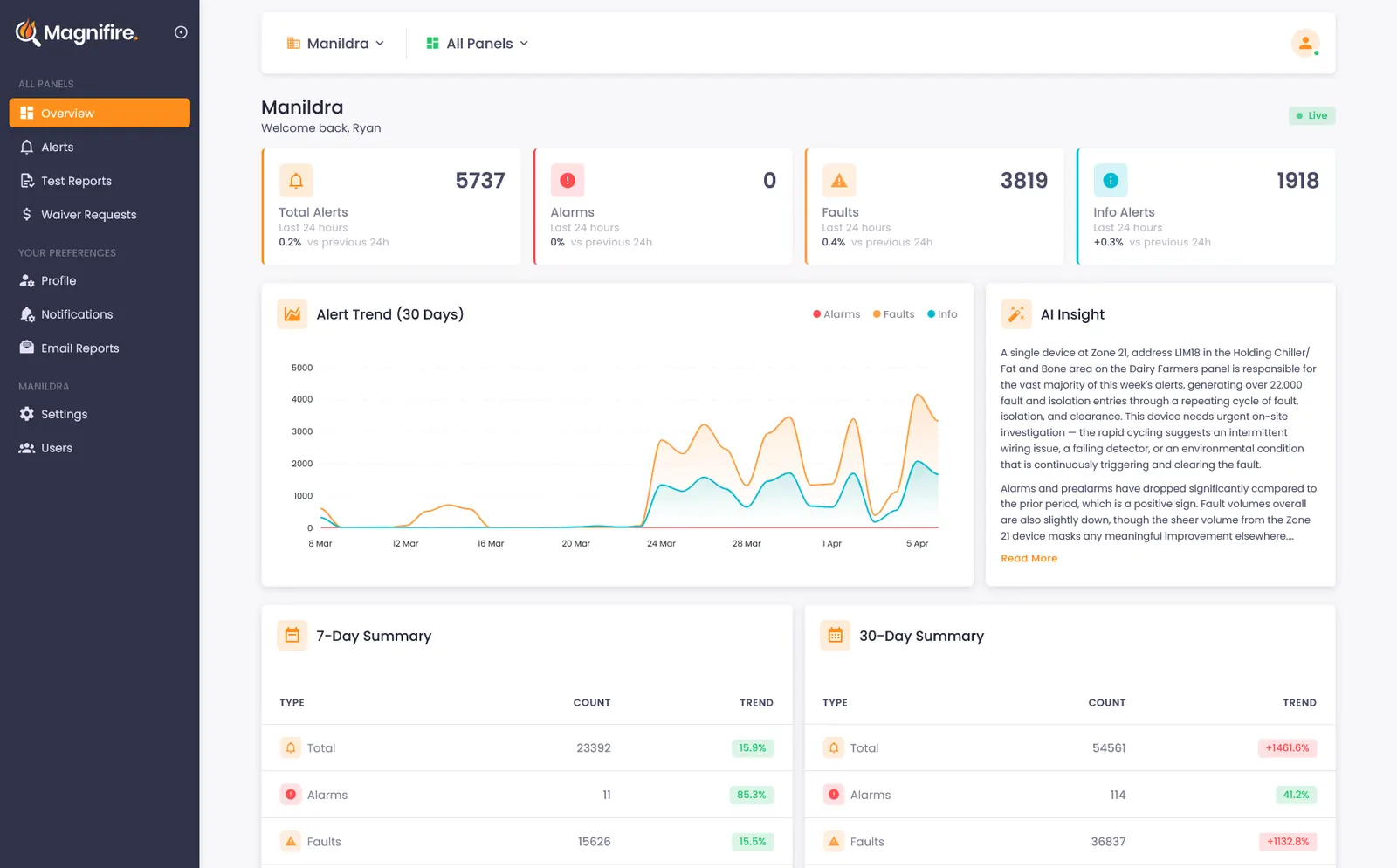
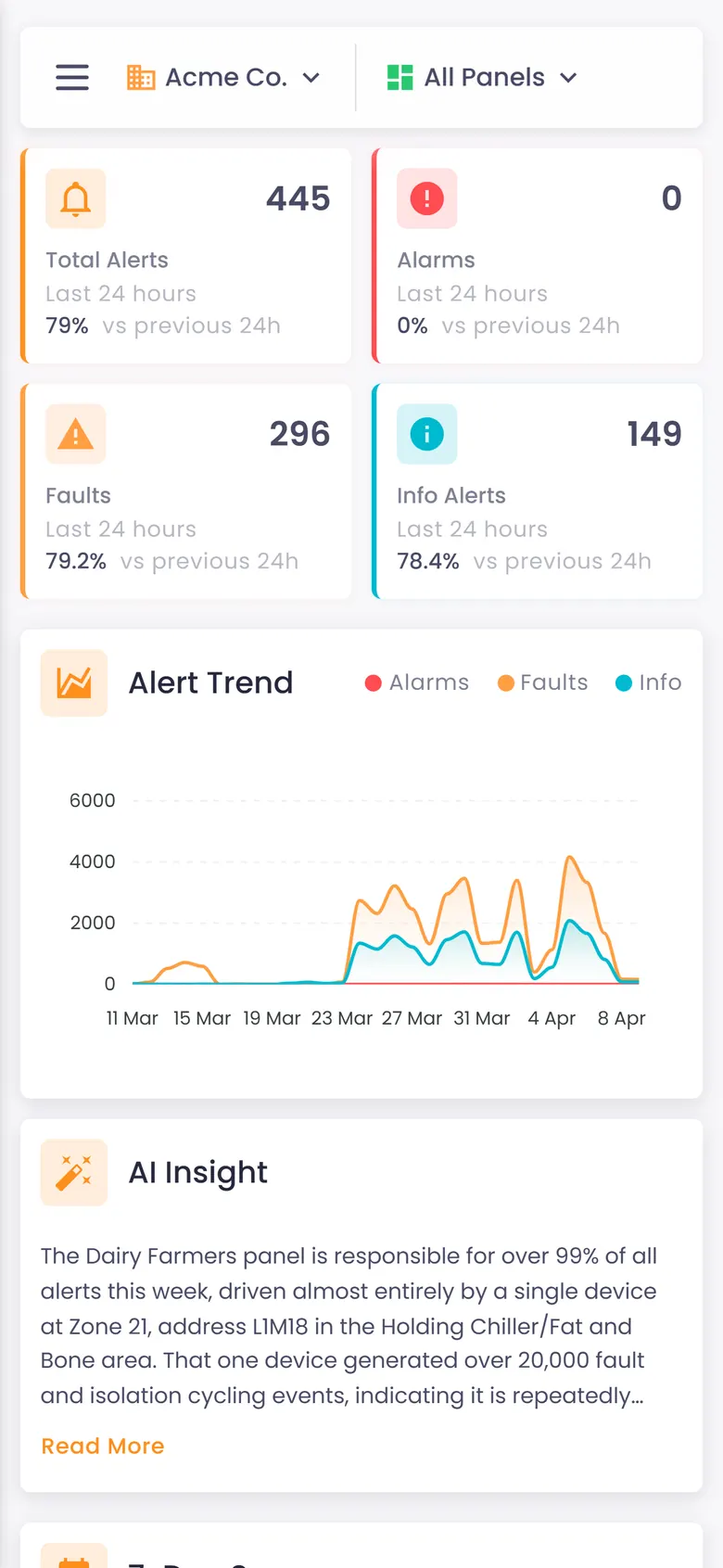
A product we co-founded and built from the panel up: the software in the cabinet, the platform, the apps, the brand and the site.
Magnifire: a product built from the panel up
This one is not a client. Magnifire is a company we co-founded, and every part of it was built here: the software that sits inside the fire panel, the cloud platform, the mobile apps, the brand and the website that sells it.
We are saying this up front because it changes how you should read the page. Ryan is a founding director of Magnifire and its CTO. Nobody briefed us, nobody signed off our work, and nobody else was in the room when a decision went wrong. That is a harder test of how we build than any client project.
One builder, every layer
Most software companies split this list across a hardware partner, a backend team, a mobile agency, a designer and a marketing shop, and spend most of their time getting them to agree. Magnifire was built by one person, in one system, so the app that shows an alarm and the board that heard it were designed to fit each other from the first day. Karl and Blake bring the fire industry and the customers. The build is ours.
Runs on a small board inside the panel and talks to it over a serial connection.
Receives every event, stores it, and serves the apps.
Dashboard, alerts, test reports, waiver requests, wallboard.
The same platform on a phone, with push and SMS alerts.
Configurable per event type, plus scheduled reports.
Features, four audience pathways, state guides and a blog.
Built to fit how the company actually sells, not the other way round.
The name, the mark, the palette and the voice, applied everywhere above.
Fire panels are old technology
The panel on the wall of most commercial buildings is decades-old technology with no smart integration at all. It knows a great deal about the building, and it tells nobody. An owner found out about an alarm when the sounders went off or the brigade pulled up. Faults, isolations and test results stayed inside the cabinet until somebody opened the door. Magnifire came from years of watching that happen.
An alarm meant a sounder or a fire truck. Faults and isolations were invisible until the next service visit, and nobody could say what had happened overnight.
Every alarm, fault, isolation and test result, live, on a phone. The same visibility helps with testing and diagnosis, which is what reduces false alarms in the first place.
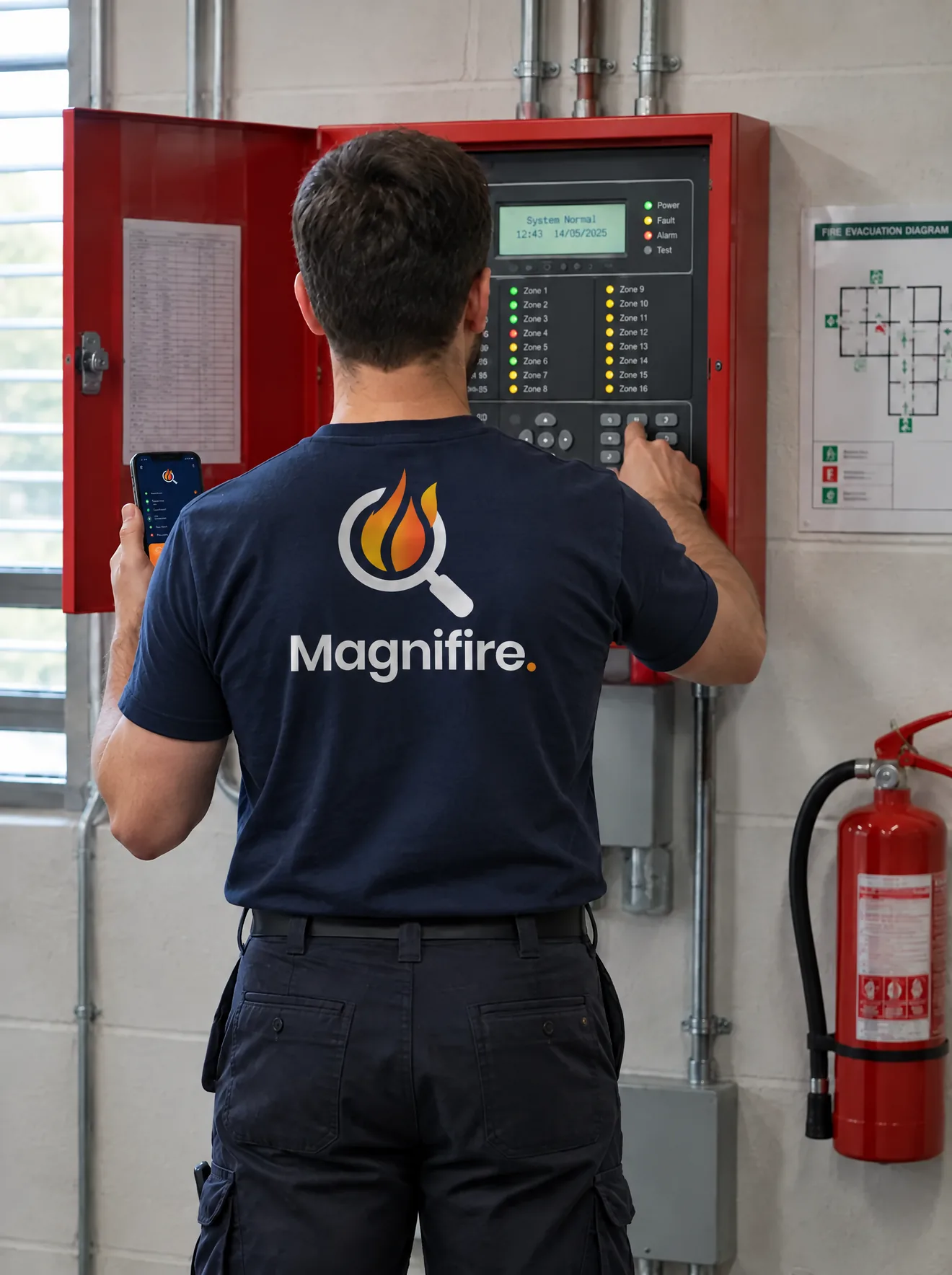
From the panel to your pocket
A small single-board computer sits inside the cabinet and listens to the panel over a serial connection. Software we wrote reads what the panel says, and sends it to the cloud platform through its API. From there it is an app notification, an SMS or an email, and a line on the dashboard. The hard parts were not in the cloud. They were in the cabinet: talking reliably to panels that were never designed to be talked to, and keeping a board online in a plant room with no reliable internet.
Panels speak in terse, inconsistent lines over a serial port. Reading them correctly, every time, on every model, took longer than anything in the cloud.
A board in a fire cupboard cannot assume good internet. Keeping the connection alive, and recovering when it is not, is most of the engineering.
AI that reads the panel so nobody else has to
Raw panel messages are cryptic. Magnifire uses AI to decipher and categorise each one as it arrives, then to write the summary a person would otherwise have to assemble by scrolling: what happened in the last 24 hours, the last 7 days and the last 30, and which device is behind most of it. The same approach drafts false alarm waiver applications against each state's own rules. The AI is a component inside the product, doing a specific job, not the product itself.
One device in Zone 21 is responsible for most of today's alerts, cycling between fault, isolation and clear. That pattern usually means an intermittent wiring issue or a failing detector. Alarms are down on the previous 24 hours. Worth an on-site check before the next test.
A website with four front doors
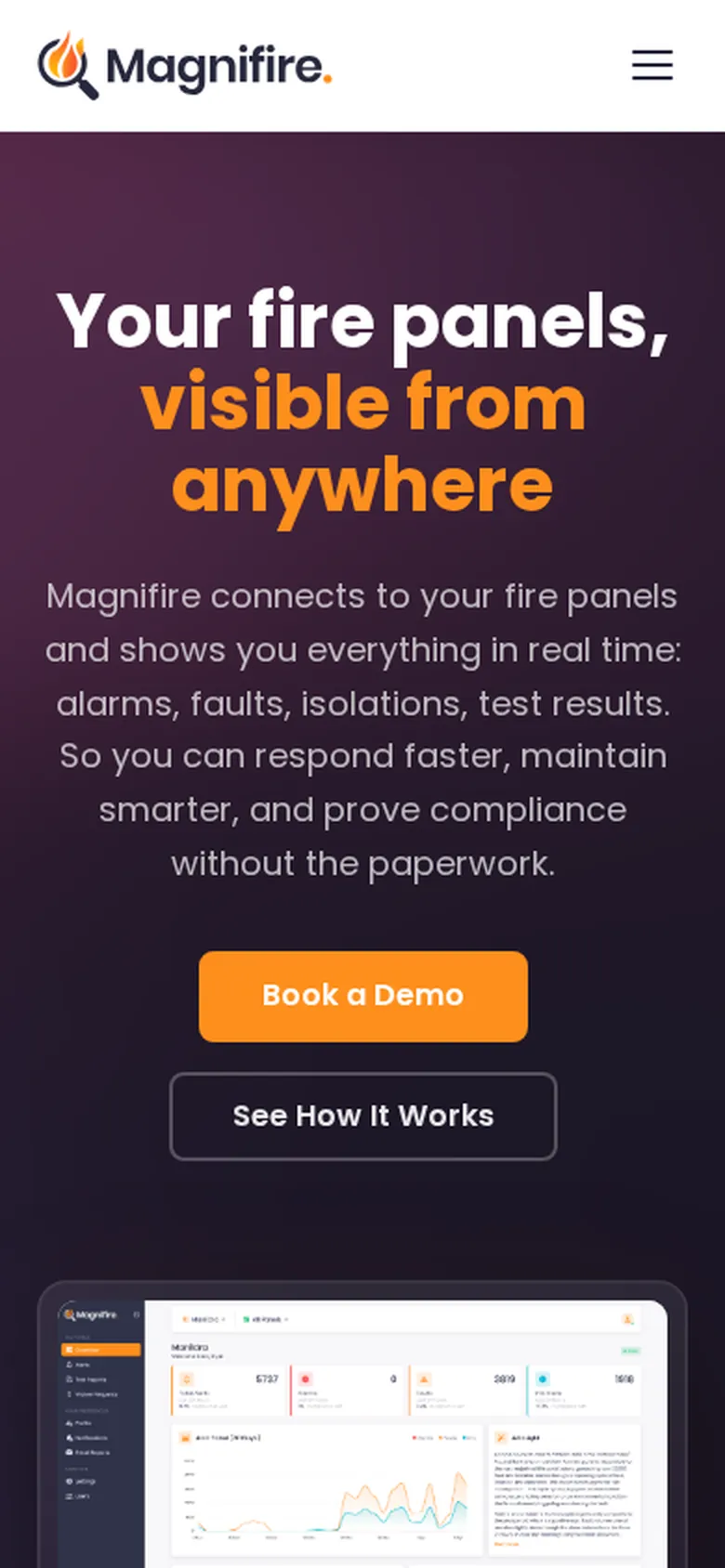
The person who owns the building, the person who manages it, the contractor who maintains the panels and the warden who has to act when it goes off all arrive with a different question. The site gives each of them their own pathway and answers it in their language, and it explains a fairly technical product with animated graphics rather than paragraphs. The brand, the name and every page were designed here, on the same system the product runs on.
Stop paying for avoidable false alarms.
Every site, without being on site.
Arrive knowing the fault history.
Know what triggered it, and where, first.
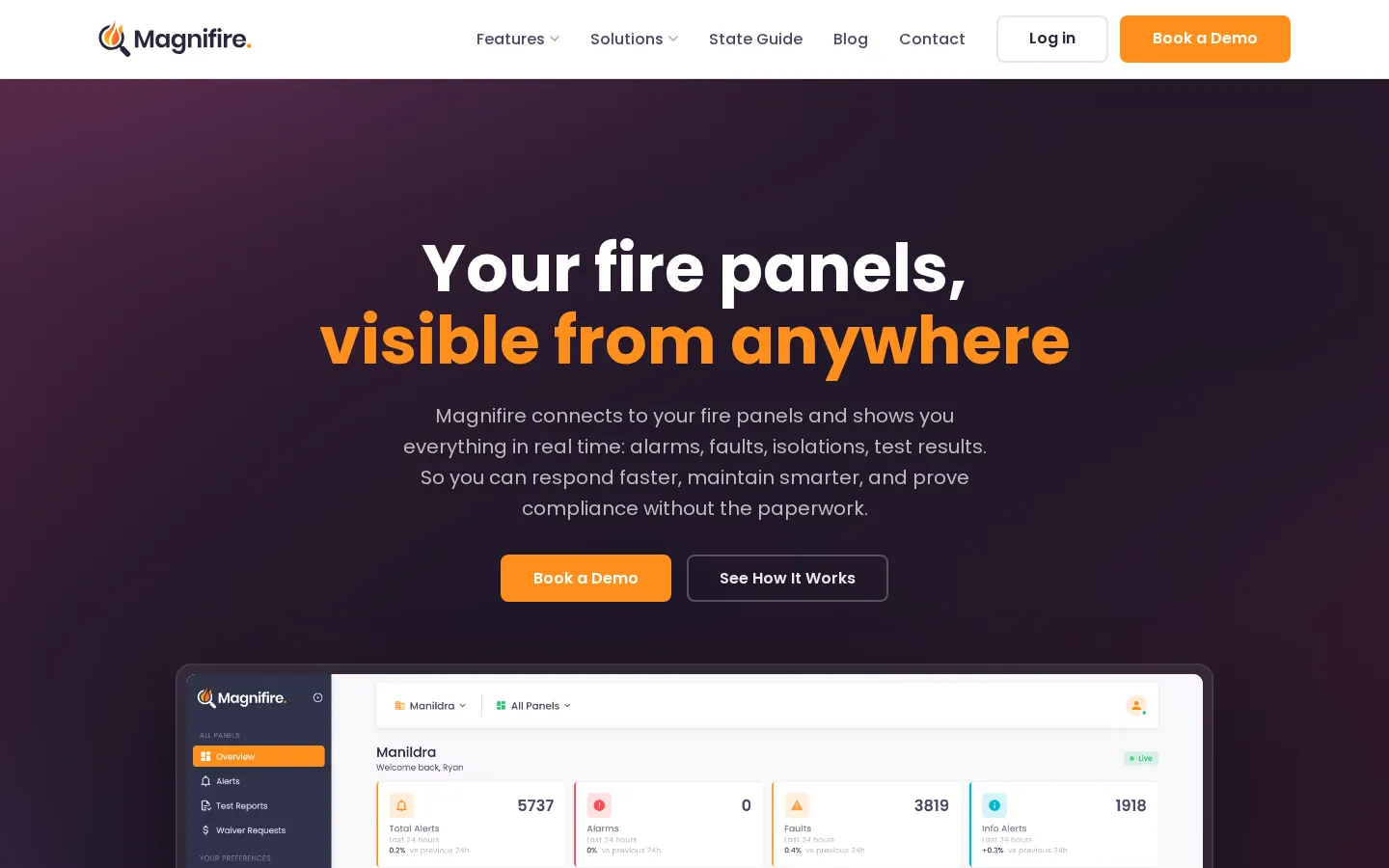
Search comes before the sales push
Magnifire is early in its commercial life, and we are honest about that: the sales push is only starting. What is already in place is the part that compounds. A guide for every state and territory, because every one of them charges different false alarm fees, sets different deadlines and runs a different waiver process, and a blog that answers the questions owners and contractors actually type. The platform is already monitoring fire panels for some of Australia's largest businesses. The site's job is to make sure the next ones find it.
Fees, deadlines, the authority and its waiver process, per state.
A blog written for the questions people search, not for the company.
What this means if you are not a fire company
You will probably never need a fire panel monitored. But you almost certainly have a system in your business that knows something and tells nobody, or a job somebody does by hand because no tool exists for it yet. Magnifire is what it looks like when we solve that kind of problem for ourselves, with our own money on the line: the whole thing, from the hardware in the cupboard to the website that sells it, and it has to keep working every day because our name is on it.
The brief was never “build an app”. It was “an owner should not find out from the fire truck”. Everything else followed from that.
When the tool did not exist, from the software in the cabinet to the CRM, we built it rather than waiting for someone to sell it to us.
Hardware, cloud, mobile, brand and web, shipped as one product that Australian businesses rely on. That is the experience your project gets.
Got a job nobody has built the tool for yet?
Describe the thing your team does by hand, or the system that knows something and tells nobody. We will tell you honestly whether it is worth building, and what we would build.