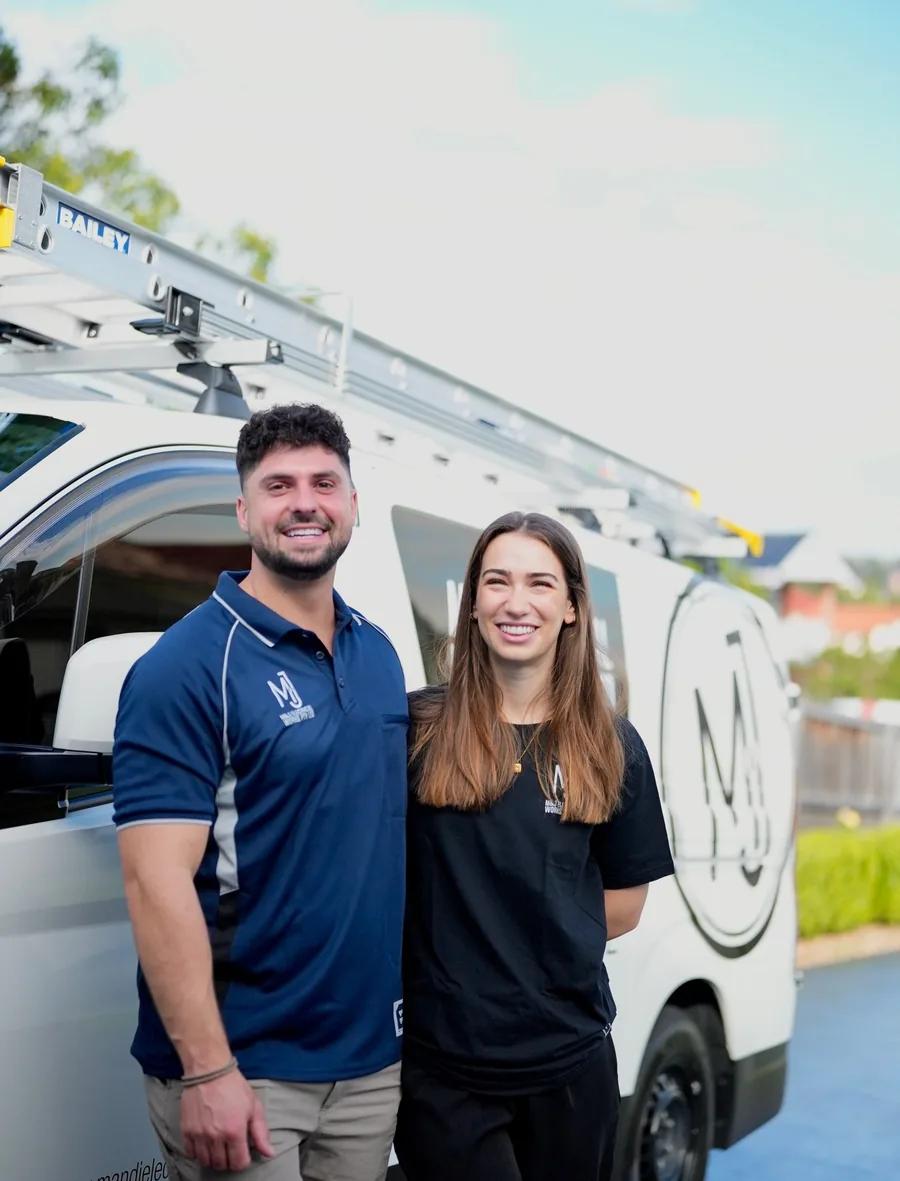
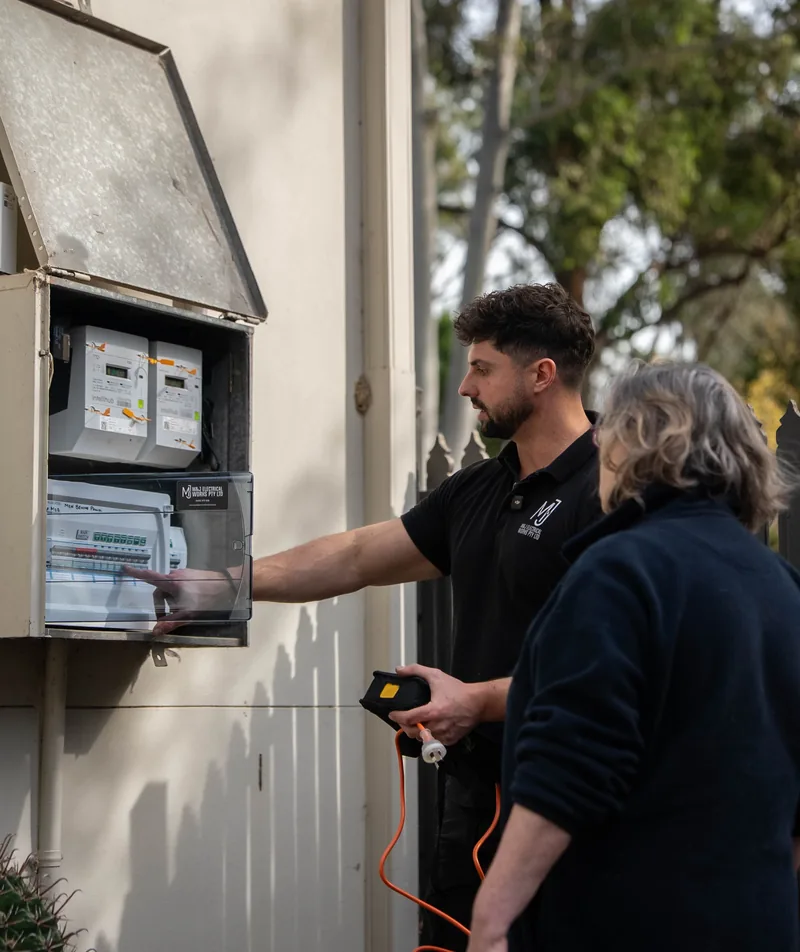
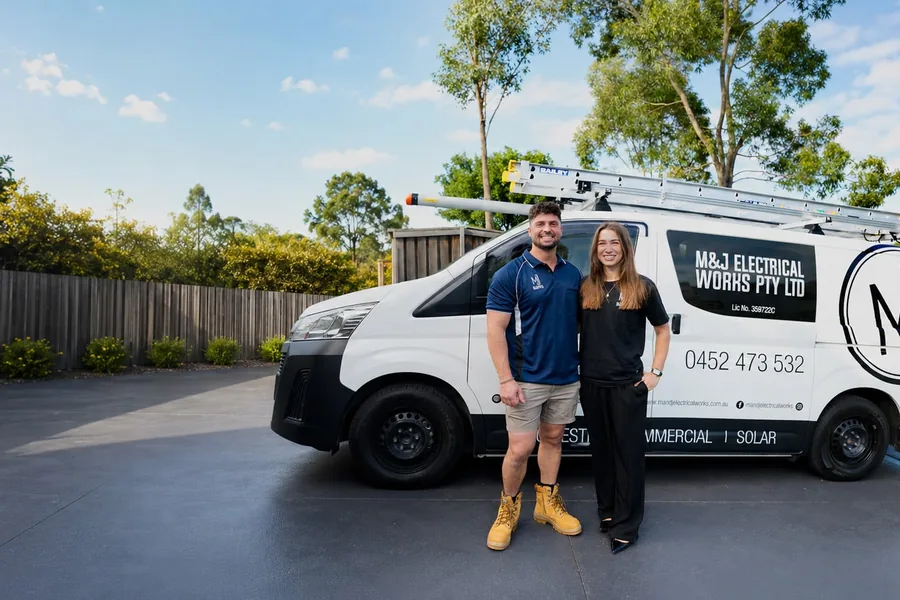
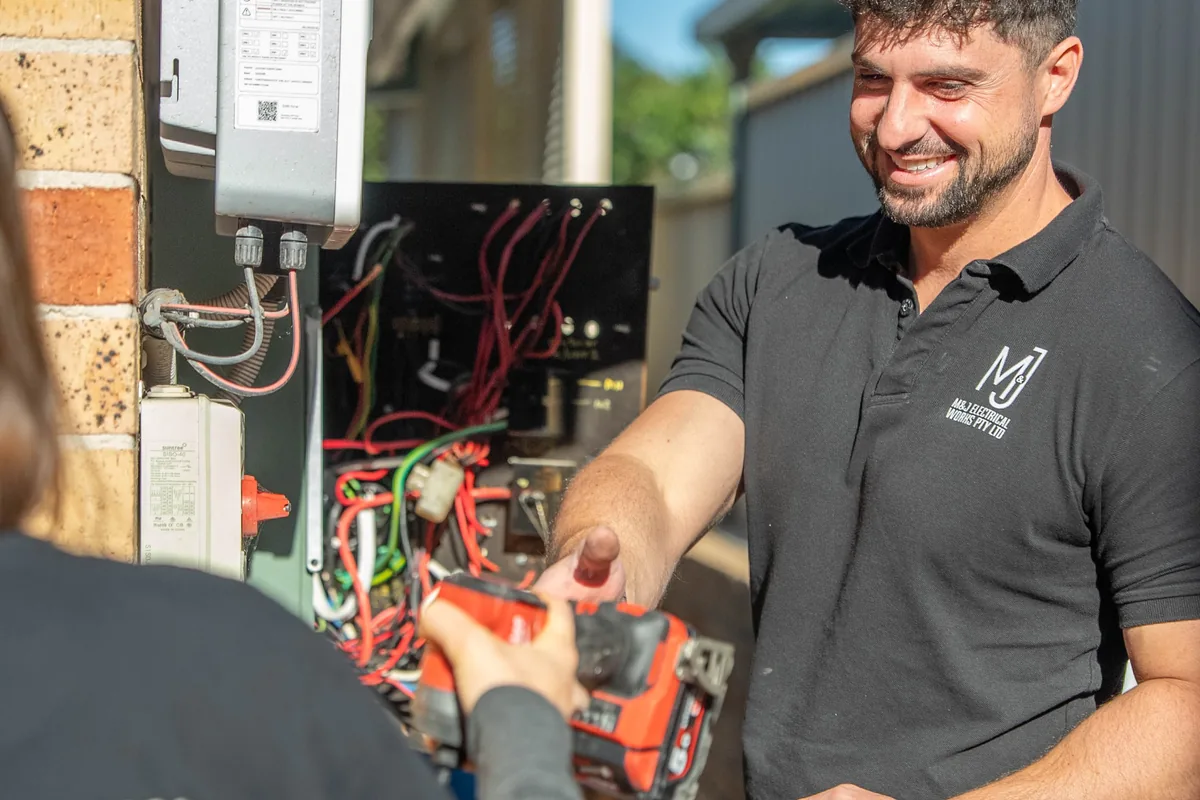
A trade website that sells two people instead of a van: Mike and Jen on camera, their jobs, their words, routed to the right suburb and the right service.

M&J Electrical Works: a business built around two people
Most trade websites sell a van and a list of services. This one sells Mike and Jen: their faces, their work and their words on every page, with each reel, photo and case study landing on the suburb and the service it belongs to.
M&J Electrical Works had everything a trade business needs to be trusted: a licence, a decade of tidy work, and a hundred-odd five-star reviews. The website showed none of it. It looked like every other electrician: a list of services, a phone number, and one Instagram feed on a gallery page nobody visited.
From a service business to a people business
The decision that drove everything else was to put Mike and Jen first. Not a brand, not a van, not a features grid: two people a homeowner can see, hear and recognise when they turn up. Once that was the premise, the site stopped being a brochure and became a system for getting their content in front of the right person: the reels Mike films on site, the photos of the work, the jobs written up as case studies, the reviews arriving on their own.
The rebuild itself, from Elementor to a token-driven Etch system, was the plumbing that made it possible. It is not the story.
There's a lot of work behind the scenes, and it deserves recognition.
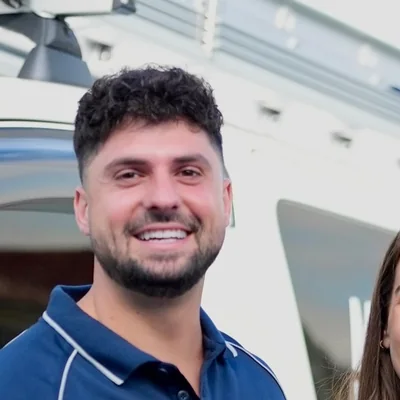
I highly recommend Ryan at Furtzdesigns for website design and SEO. He's put a huge amount of work into our website and ongoing SEO for M & J Electrical Works, and I really appreciate what he's done for our business.
We take a lot of pride in our electrical work, and having a website that reflects that standard is important to us. Ryan has helped us present our business professionally, showcase our actual work and make it easier for customers to understand our services and get in touch.
His attention to detail deserves a special mention. From improving our service pages and local SEO to incorporating our job videos and developing our EV charger enquiry tool, he's put real thought into what our business and customers need.
I'm pretty particular about how our business is presented, and I've really appreciated the effort he's put into the changes and ongoing improvements. There's a lot of work behind the scenes, and it deserves recognition.
If you're a business owner looking for someone to build or improve your website and work on your SEO, I'd happily recommend Ryan.
Thanks for everything, mate!
Mike on the tools, Jen in the business, on every page
The content is theirs and it is shot properly: reels of Mike on site with the job explained on camera, a short film introducing the two of them, job photography from a real camera rather than a phone, and Jen's side of the business in the behind-the-scenes clips. The site's job is to use all of it, not to park it on one page.
So the film sits in the About hero and full-width on the homepage. A reel opens every suburb page. Clips replace stock photography in the split sections of the service pages. Nothing is decoration; every placement is a specific person doing a specific job somewhere nearby.
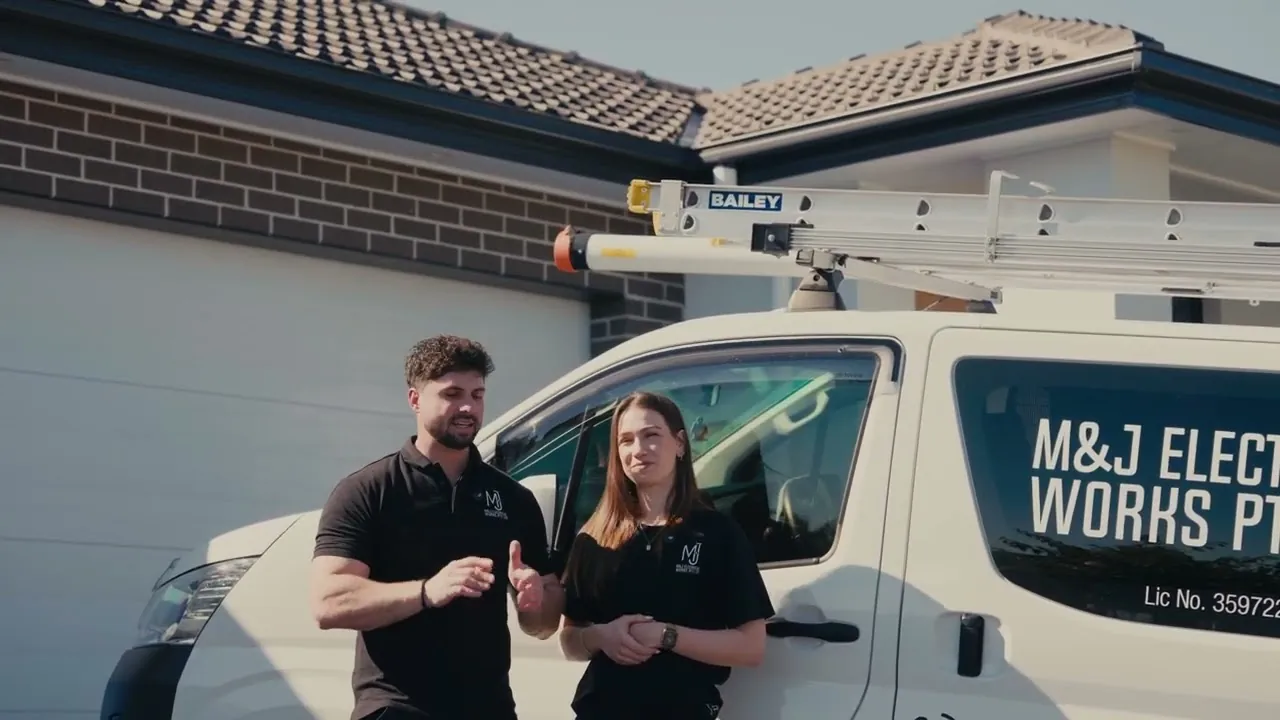
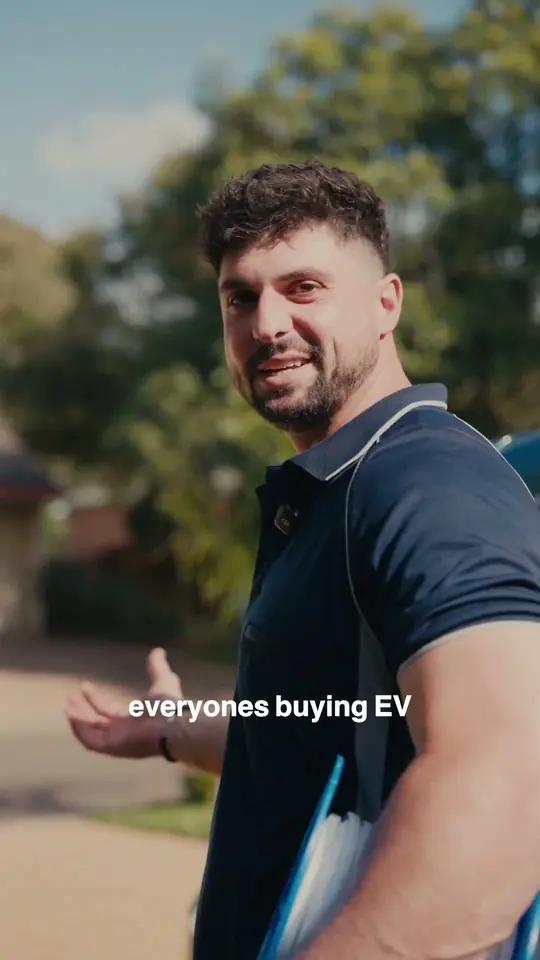
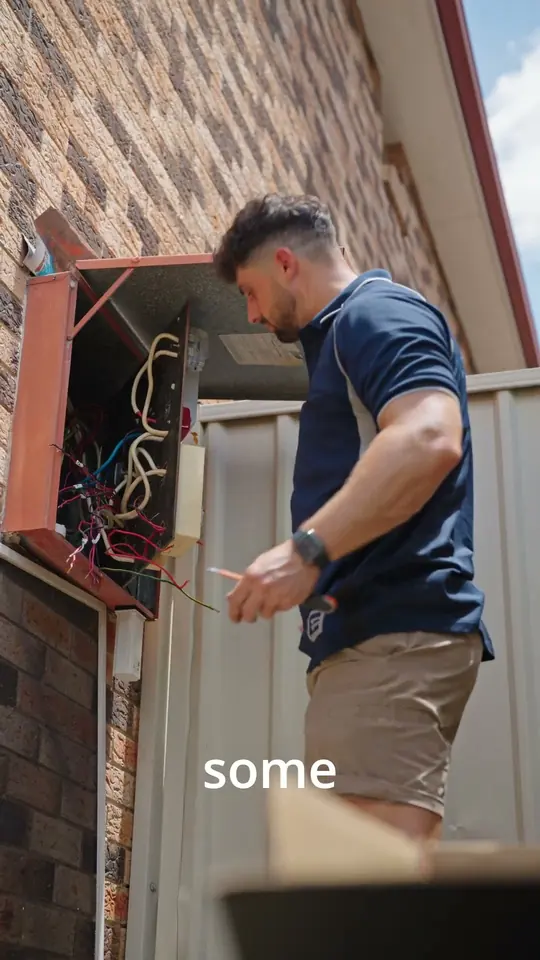
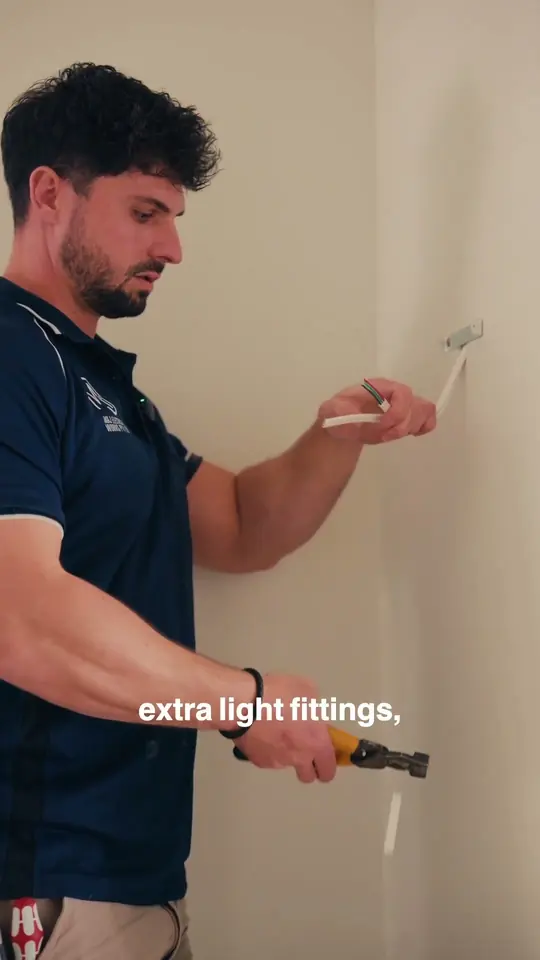
The site's own treatment: a poster frame with a square control, the way the client wants it, and the last cell of every row goes to Instagram.
Every post finds its own page
Nobody at M&J uploads anything to the website. Mike posts to Instagram the way he always has. Every six hours the site pulls the account, keeps the caption, the hashtags and the location, and each service page shows only the posts that match its job: a switchboard reel lands on the switchboard page, a downlight photo on the lighting page. If a filter finds fewer than three posts it widens rather than showing two lonely tiles.
The suburb pages do the same: each one shows the work geotagged or hashtagged in that suburb, falling back to the latest posts where fewer than three exist. The reels are placed by hand and by suburb, in tiers: filmed in that suburb, confirmed there by the client, or chosen to suit the housing stock. The case studies carry their own service and suburb, so the bands on those pages render on their own.
The research decided which pages exist
Before a suburb page or a service page was written, we pulled what people in Western Sydney actually search for, term by term and suburb by suburb. That research added eleven suburbs on demand, created a smoke alarm page for a search that had no home, and rewrote every suburb page around its own questions, its real neighbours and a job done nearby, instead of the same nineteen questions on all of them.
The case studies were named the same way. “Electrician in a suburb” is searched a few dozen times a month; “install an EV charger at home” is searched hundreds. So each study leads with the job, and the suburb follows.
National figures, so M&J's real share is the Western Sydney slice. They decide which pages exist, not what traffic to expect.
Case studies that link both ways
Eight jobs are written up from Mike's invoices and job diaries, with the meter serials blurred and no customer named: the suburb, the job, how long it took, and what it involved, with Michael as the named licensed author. Each one links to its service page and its suburb page.
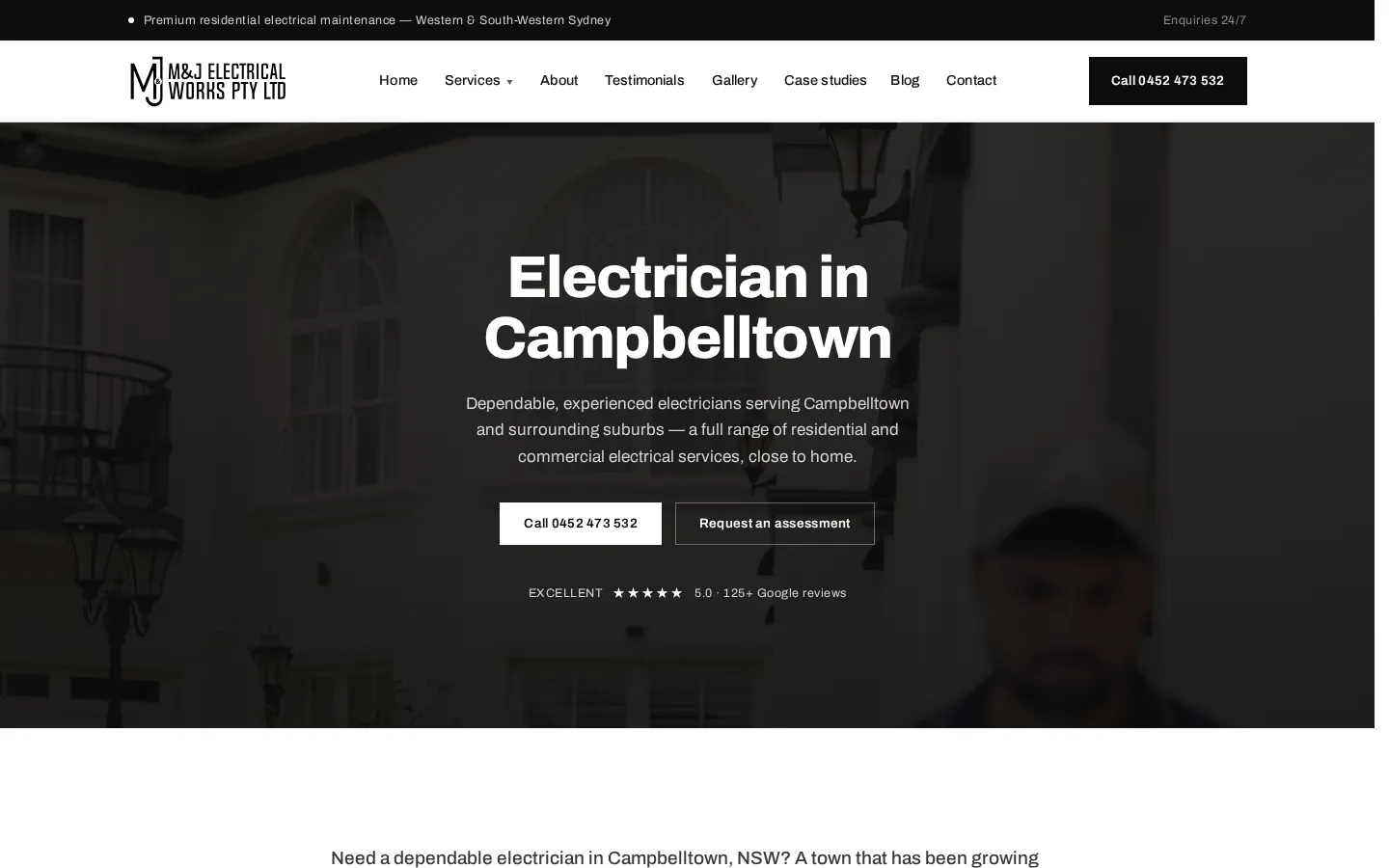
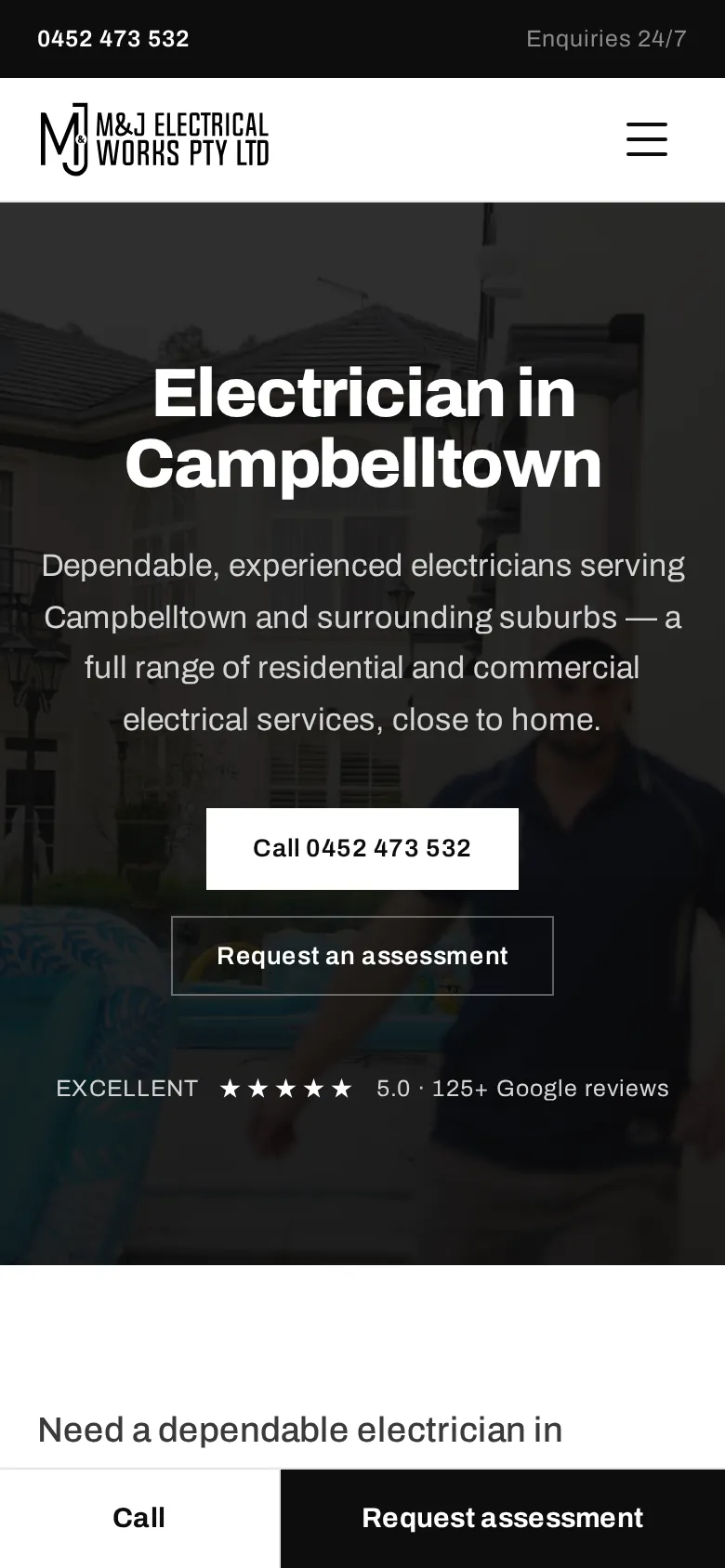
The links back are not pasted in either. Tick a service on a study and that service page grows a card band and a sentence, “See it on real jobs”. Set the suburb and the “Real jobs around Campbelltown” band appears on that page. Do more work in a new suburb, and the page for it fills in.
A site that keeps proving them
The site went live in late July and has not stopped changing since: the reels placed in early August, the suburb system rebuilt two weeks later, the Instagram filters in September, the case studies after that. Every new reel, review and job strengthens a page somewhere without anyone touching the website.
Michael has said what it did for them in his own words, above. What we have not done yet is measure the leads, and we will not print a number we cannot stand behind, so this page carries the things that can be checked.
Rebuilt on Etch, Mike and Jen on the front page, enquiries into the CRM.
Two films and 26 reels placed across 56 slots, one on every suburb page.
Own questions and neighbours per page, eleven suburbs added on search demand.
Instagram synced to the site and routed to 21 pages by hashtag and keyword.
Eight case studies, linked to their services and suburbs both ways.
Is your website selling the van, or the people?
If customers book you because of who you are, your site should show them. Tell us what you already film and photograph, and we will tell you where it should be landing.